

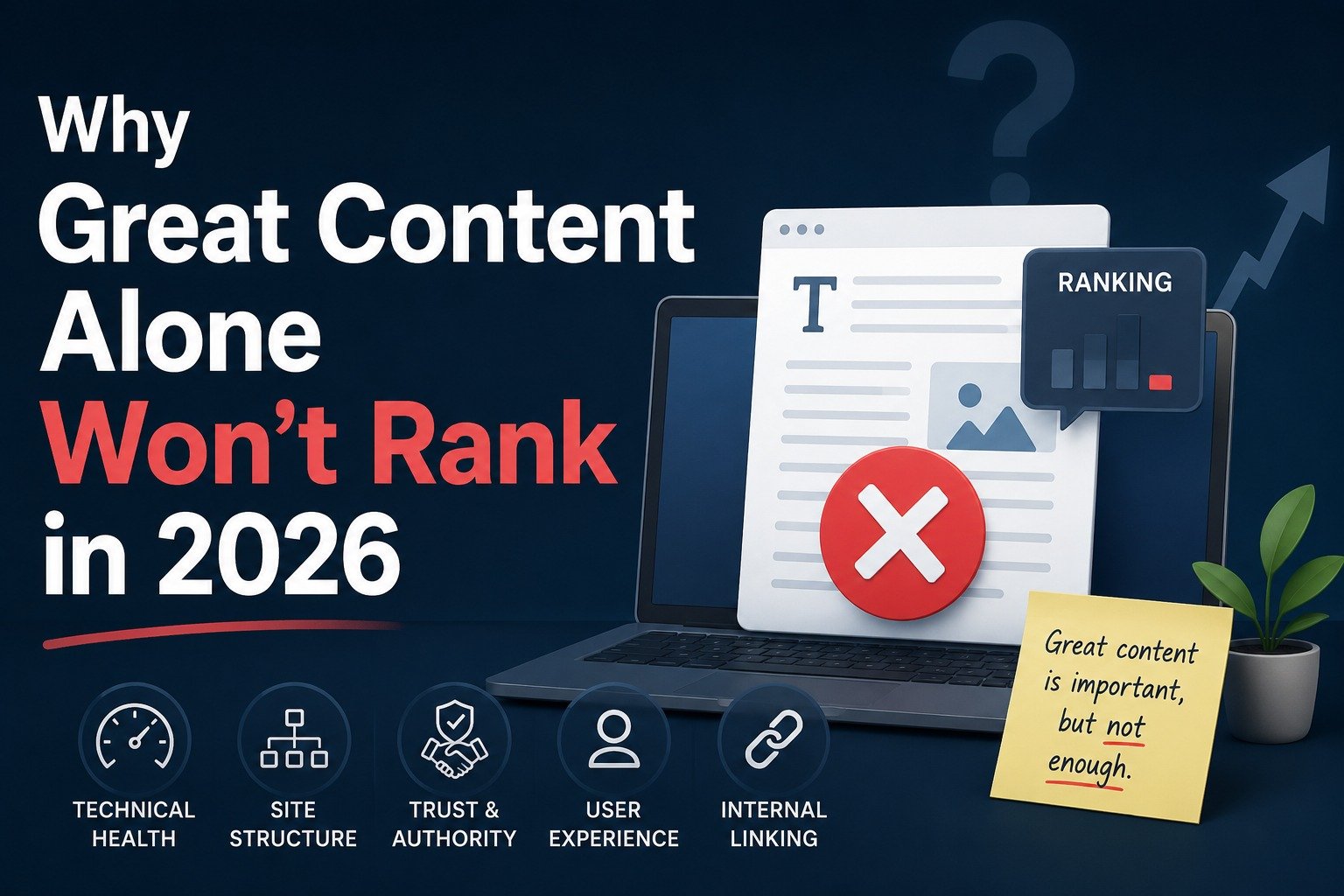
Today, many businesses publish high-quality content regularly and still struggle to gain visibility in search results.
The reason is simple:
Search engines now evaluate the entire website experience, not just the articles published on it.
That means even strong content can fail to rank if the website behind it lacks structure, trust, or technical quality.
Search Visibility Has Changed
Search is no longer limited to traditional Google result pages.
Users now discover information through:
AI-generated answers
Google AI Overviews
Zero-click search experiences
Voice search
AI-powered recommendation systems
Because of this shift, search engines have become more selective about which websites they trust.
In 2026, websites need more than keyword-focused content strategies.
They need to demonstrate:
technical reliability,
clear website structure,
topical authority,
fast and accessible user experience,
and consistent trust signals.
Search engines increasingly prioritize websites that are easy to understand, well-organized, and technically stable.
Why Many Websites Struggle to Grow
A common frustration for businesses today is this:
Content is published consistently
Keywords are researched properly
Service pages are optimized
SEO efforts continue every month
Yet rankings remain unstable or growth slows down.
In many cases, the issue is not the content quality itself.
The real limitation is the website foundation.
Problems such as:
weak technical SEO,
poor internal linking,
unclear site architecture,
slow performance,
duplicate pages,
or inconsistent authority signals
can reduce the impact of otherwise valuable content.
As online competition increases, search engines rely more heavily on overall website quality, not just individual pages.
What Search Engines Prioritize in 2026
Modern SEO performance depends on multiple connected factors working together.
These include:
Content Quality
Content still matters. Search engines continue to reward useful, relevant, and original information.
Technical SEO Health
Websites need clean code structure, fast loading speeds, mobile optimization, and crawl accessibility.
Website Structure
Clear navigation and logical content organization help search engines understand authority and relationships between pages.
Internal Authority Flow
Strong internal linking improves discoverability and distributes ranking strength across important pages.
User Experience
Search engines increasingly evaluate how users interact with websites, including usability, engagement, and accessibility.
Trust & Consistency
Brands that demonstrate expertise, consistency, transparency, and authority tend to perform more reliably over time.
SEO in 2026 Is About Website Quality
Publishing quality content is still important.
But content alone is no longer enough to compete in modern search results.
Businesses seeing long-term SEO growth are investing in:
stronger website foundations,
better technical optimization,
clearer site structure,
and improved search experience overall.
Because modern SEO is no longer just about creating content.
Search rankings today are influenced by the overall quality and performance of a website.